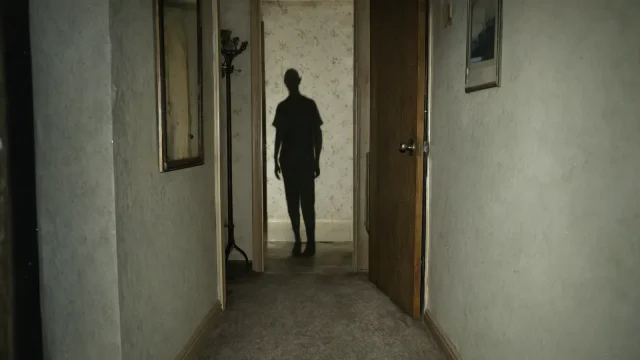
Created in 2021 by seventeen-year-old Wisconsin student Alex Kister during summer college, The Mandela Catalogue ranks among the defining internet horror archives of its generation. Styled as recovered police instruction tapes, corrupted children’s animation, and early digital files, the series unfolds inside fictional Mandela County, Wisconsin, spanning the early 1990s through the late 2000s and early 2010s.
Across those decades, residents confront nearly immortal shape-shifters known as Alternates. Commanded by an impostor masquerading as the Archangel Gabriel, these hostile figures hijack televisions, home computers, and car GPS units, torturing targets psychologically toward suicide so the doppelgängers can steal their identities.
Every recorded tape is scripted fiction—Mandela County and its police precinct do not exist on real Wisconsin maps. Kister titled his project after the Mandela Effect, though he later joked in an interview that he would have called it “Identity Theft” to avoid confusion with Nelson Mandela.
Production History and Visual Evolution Across Acts
The project originated as Kister’s first filmmaking venture in Richfield, Wisconsin (also noted as Hubertus in genre summaries). On June 9, 2021, he uploaded overthrone, a standalone short adapted from a high school writing assignment and an early concept for twisting children’s cartoons into eerie broadcasts. Growing attention on YouTube—fueled by reaction streams and frame-by-frame story analyses—pushed him to build that single tape into an expansive modern universe.
Early chapters proved how effectively tight constraints fuel dread. Operating on a modest home budget informally estimated under a thousand dollars (largely spent on a faster editing PC), Kister shot inside his own house and cast friends via voiceovers and still photographs; his mother even portrayed an Alternate. He cited David Lynch’s cinematography alongside web precursors Local 58, The Walten Files, and Gemini Home Entertainment. Filmmakers studying those techniques can examine our analog horror production guide.
Verified records as of July 2026 log 19 canon installments—six volumes and 13 shorter releases—running a combined 4 hours, 9 minutes, and 41 seconds through Vol. 6 (32 total uploads when counting non-canon entries). Kister originally sorted YouTube uploads into separate Act I (2021–2022) and Act II (2022–present) playlists before merging everything into one unified canon playlist. Visually, Act I mimics degraded VHS recordings from the 1990s, whereas Act II shifts toward dated digital camcorders and mixed-media sequences mirroring the newer timeline.
Complete Canon Episode Log and Archival Releases
Because Kister later restored and revised early videos, new viewers frequently stumble onto outdated prototypes. The index below lists all 19 canon tapes in recommended watch order as of Vol. 6.
| Installment Title | Release Type | Archival Note |
|---|---|---|
| overthrone | Short tape | Debut upload (June 9, 2021); corrupted nativity cartoon unveiling false Gabriel. |
| The Mandela Catalogue Vol. 1 [RESTORED EDITION] | Main entry | Canonical remake replacing original Vol. 1; introduces Mark, Cesar, and MCPD tapes. |
| intruder alert | Short tape | Broadcast warning tying television anomalies to missing children. |
| exhibition | Short tape | Combines Mark’s home footage with altered Noah’s Ark religious animation. |
| The Mandela Catalogue Vol. 2 | Main entry | Follows BPS investigators Adam Murray and Jonah Marshall on an overnight trap. |
| The Mandela Catalogue Vol. 333 | Main entry | Focuses on Lieutenant Thatcher Davis, the Murray house crisis, and an entity attack. |
| every day gets brighter | Short tape | Post-incident audio reflection recorded by Thatcher Davis. |
| interlude | Short tape | Act bridge cataloging assimilation records across Mandela County. |
| The Mandela Catalogue Vol. 4 | Main entry | Mixed-media expansion spotlighting Evelin Miller, Dave Lee, Sarah, and Gabriel. |
| THE BEGINNER’S BIBLE “THE STORY OF EASTER” CLIPS CIRCA1995 | Short tape | Manipulated religious cartoon excerpt linked to Gabriel’s scriptural hijack. |
| mandela catalyst | Short tape | Aftermath transmission tracking psychological fallout among survivors. |
| Presto | Short tape | Evelin and Sarah investigate hidden MandelaTECH records. |
| 1_19_09 221a | Short tape | Archival Act II fragment uploaded ahead of Vol. 5. |
| 2:38 | Short tape | Late-night supplemental clip leading into the fifth volume. |
| The Mandela Catalogue Vol. 5 | Main entry | Expands Jude Murray’s crisis while widening Gabriel’s reach. |
| Unraveling, Pt. 1 | Short tape | Opening half of a two-part bridge following Vol. 5. |
| Unraveling, Pt. 2 | Short tape | Second bridge clip escalating events toward Vol. 6. |
| Cognitohazard | Short tape | Brief perceptual-threat recording released ahead of the sixth volume. |
| The Mandela Catalogue Vol. 6 | Main entry | Sixth primary volume completing the 19-episode canon record as of July 2026. |
Outside this canon list, archivists catalog several retired or alternate branches. The original Vol. 1 now stands as an alternative retelling, while early shorts—The THINK Principle, metaphysical awareness disorder (Original Edition), and THE BEGINNER’S BIBLE “JESUS IS BORN” CLIPS CIRCA1995—were decanonized or folded into the non-canon ORIGINAL_COPIES vault alongside Trauma, Mark’s Soliloquy, Encounter A (v1), and Emergency Call Operator Training. Clips such as My Movie.mp4 and Soccer game 2009 (included on the Vol. 2 CD) remain unconfirmed in canon status.
Expanded web artifacts once deepened the ARG mystery: websites Mandelatech.com and Mandelapolice.com hosted hidden dossiers before being taken offline, complemented by secret channels GENESIS APOCRYPHON and Alldarkallgone, the spin-off Mystifying Oracle, self-parody The Scrimblo Catalogue, and non-canon Makeship promotional shorts. Notably, Vol. 1 [RESTORED EDITION] inserts vintage cinema cameos from Nosferatu (Max Schreck and Gustav von Wangenheim), Little Lord Fauntleroy (Freddie Bartholomew and Dolores Costello), and The Phantom of the Opera (Norman Kerry and Mary Philbin), while edited clips from The Beginner’s Bible supply biblical animation (with Rich Swingle credited as voicing Adam in Vol. 2).
Cast of Characters, Investigators, and Hostile Forces
Beneath its clinical VHS framing, the series tracks a tight human ensemble fractured by institutional neglect and grief.
Human Investigators and Victims
- Thatcher Davis (Thorne Baker): Ex-Lieutenant with the Mandela County Police Department (MCPD) and main protagonist. After a hostile entity slays his fellow sergeant Ruth Weaver at the Murray home, Thatcher resolves to stop every Alternate alone.
- Mark Heathcliff (Alex Kister): Older brother of Sarah Heathcliff. Baited to his dead friend’s residence by an impostor, Mark gets trapped indoors, develops Metaphysical Awareness Disorder (M.A.D.), and takes his own life after police ignore his pleas.
- Sarah Heathcliff (Rachel Ridley): Founder of the Bythorne Paranormal Society (BPS), driven by grief over Mark to expose the entities and dismantle the negligent police force.
- Adam Murray (Ty Osborne): A BPS investigator abducted at age four by The Intruder; hunting for his missing mother forces Adam to confront a life-altering secret about his own identity.
- Evelin Miller (Spidey): Adam’s ex-girlfriend and MandelaTECH worker who teams up with Sarah after noticing an eerie personality shift in Adam.
- Cesar Torres (Andrew Long) and Jude Murray (Michael Vale): Early casualties shaping Act I. An impostor assimilates Cesar to trap Mark, while Jude—Adam’s father and Lynn’s husband—calls the MCPD in panic and relocates to another county after his family collapses.
- Supporting Figures: Sergeant Ruth Weaver (Bee “Fruitmasseuse” L) is killed during the Murray house call; BPS teammate Jonah Marshall (Gabriel Linan) dies after deserting Adam at 3 a.m. during a stakeout; Lynn Murray (Lighth0use) hangs herself upon discovering Adam’s abduction; and MandelaTECH manager Dave Lee (Alex Kister) helps Thatcher recover supernatural tapes before Gabriel lures him to a church job and kills him. Later Act II threads bring Adam’s friend XXxNOAHxXx and veterinarian Amanda into a deadly abandoned-house trap.
Antagonists and Anomalous Threats
- Archangel Gabriel (voiced via eSpeak in overthrone, Microsoft Sam in exhibition and Vol. 5, and Kyle DeNigris in Vol. 4): Primary antagonist, first Alternate, and the franchise’s embodiment of Satan. Usurping the genuine Gabriel lets him twist human religion and lead the Alternate invasion.
- The Intruder / Six (Microsoft Sam in intruder alert and Vol. 2; Leon Rodriguez in Vol. 4): Distinctly classified as a humanoid anomaly rather than an Alternate, yet allied with Gabriel. He is responsible for abducting over three thousand children—Adam included—and precipitating parental suicides.
- Active Alternates: Notable field specimens include Cesar’s Alternate (The Perpetrator), The Murray Residence Alternate (manifested via TV through Stanley/The Intruder and Adam before killing Ruth Weaver and stalking Thatcher seventeen years later), The Preacher (an elderly nun stalking young Adam), and N (a T.H.I.N.K. Principle figure who drove Jude Murray insane). See our dedicated Alternate entity dossier for full subtype records.
Religious Themes, Plot Dynamics, and Viewer Interpretations
Theological dread separates Mandela Catalogue lore from standard monster tapes. Kister has explained that the series grew out of an existential crisis involving Christianity, sharpened by COVID-19 isolation and lost personal security. Episodes repeatedly reinterpret scripture—invoking Mary and Joseph, Jesus’s birth, Adam and Eve, and Noah’s Ark—while strongly implying that Alternates are demonic beings serving Satan disguised as Gabriel.
Beyond those direct textual signals, archivists draw a clean boundary around fan theories and viewer interpretations that remain unconfirmed in canon:
- Divine abandonment (viewer interpretation): Many community analysts infer that God abandoned Mandela County after false Gabriel sabotaged the Annunciation and prevented or replaced Jesus’s birth. While scriptural distortions point heavily toward that bleak reading, Kister has never stated the Messiah’s exact fate outright.
- Blasphemy debates (viewer interpretation): Some online viewers ask whether the series counts as blasphemy. Creator commentary and episode tone suggest the inverse: the dread functions precisely because corrupting sacred imagery feels alarming, casting Satan squarely as a malevolent deceiver.
- What triggers M.A.D. (viewer interpretation): Because recordings mute the exact words Alternates whisper to cornered targets, fans speculate they disclose horrifying cosmic proof that humanity has worshipped an impostor for millennia. That mechanism remains viewer speculation rather than stated fact.
Critical Reception, Internet Culture, and Spin-Off Media
Media coverage quickly propelled the tapes beyond niche horror channels. Dread Central hailed the franchise as “the supreme [example] of what analog horror looks and sounds like,” commending its visual manipulation of suspense. Ohio University’s The Post compared its uncanny valley craft favorably with The Walten Files, and GQ profiled Kister’s teenage breakthrough. Critique also surfaced: TLK Magazine praised the worldbuilding but felt monotone voice acting weakened emotional stakes, while segments of the audience faulted Vol. 4‘s green-screen live-action shots as unrealistic—an artificial sheen Kister defended as an intentional uncanny valley effect.
Popularity metrics underscore that reach: the series placed 46th on IMDb’s chart of the 100 most popular found footage horror titles, outranking Paranormal Activity 2, Gemini Home Entertainment, and The Monument Mythos. Online culture expanded through parodies and memes, notably animator Sr Pelo’s June 30, 2022 spoof The Mandela Magazine (warmly acknowledged by Kister) and a 2023 TikTok VHS trend set to the warning clip “If you see another person that looks identical to you, run away and hide.”
Merchandise and indie games widened the footprint further. Kister partnered with Makeship starting in October 2022 for collectible plushies, while Retro Release Video announced a collectible Vol. 1 VHS release in March 2024 and re-announced the edition in August 2024. Tie-in indie games include actor Thorne Baker’s 2021 interactive police-tape game Maple County, alongside Alternate Watch, Assessment Examination, and Broken Arrow Games’ Mandela Invasion.
Feature Film Adaptation Status
Questions about a Mandela Catalogue movie dominated fan forums for years before studio news solidified. Verified reporting through late 2026 confirms three key milestones:
- June 2022 – May 2025 (Script Origin): In May 2025, Kister disclosed he had been developing a feature screenplay since June 2022 about recent high-school graduates fighting to preserve reality after a classmate vanishes, blending found footage with traditional live action.
- July 2026 (Studio Deal & Producers): After an 11-studio bidding battle, Paper Street Pictures, Amblin Entertainment, and Amazon MGM Studios’ United Artists unit confirmed active development. Kister directs from a script co-written with Tyler Clifton, with Aaron B. Koontz, Scott Stuber, and Steven Spielberg among the producers.
- September 2026 (Theatrical date): Studios formally set a theatrical premiere date of June 9, 2028—timed to the exact calendar anniversary of overthrone‘s June 9, 2021 YouTube debut.
As of November 2026, theatrical casting and a formal theatrical age rating remain unannounced. The YouTube tapes themselves carry no formal rating, though recurring suicide themes, abduction motifs, and eerie religious distortion make them unsuitable for young viewers.
Frequently Asked Questions
Is The Mandela Catalogue based on a true story?
No. The Mandela Catalogue is completely fictional analog horror created by Alex Kister in 2021. Mandela County, its police department, and the Alternate invasion are invented, with the title inspired by the Mandela Effect.
How many canon episodes are in The Mandela Catalogue and how do you watch them?
As of July 2026, canon totals 19 YouTube releases—six volumes and 13 shorts—spanning 4 hours, 9 minutes, and 41 seconds through Vol. 6. Watch Kister’s unified playlist beginning with overthrone and Vol. 1 [RESTORED EDITION] rather than decanonized prototypes.
When is the Mandela Catalogue movie coming out and who is directing it?
In September 2026, Paper Street Pictures, Amblin Entertainment, and United Artists dated the feature film for June 9, 2028. Creator Alex Kister directs from a screenplay co-written with Tyler Clifton, with Aaron B. Koontz, Scott Stuber, and Steven Spielberg producing.
How scary is The Mandela Catalogue and what is its age rating?
Neither the YouTube tapes nor the 2028 feature carry a formal age rating yet. Instead of constant jump scares, the series builds creeping dread via distorted faces, dark biblical symbolism, and explicit themes of suicide and abduction, suiting older teens and adults.
What is the difference between Alternates and The Intruder?
Alternates are near-immortal shape-shifters led by false Archangel Gabriel who drive targets toward suicide to replace them. The Intruder (Six) is explicitly a distinct humanoid anomaly allied with Gabriel, responsible for kidnapping over three thousand children including Adam Murray.
Are there indie games inspired by The Mandela Catalogue?
Yes. Notable tie-in and fan-inspired indie titles include Maple County (2021, created by series actor Thorne Baker), Alternate Watch, Assessment Examination, and Broken Arrow Games’ Mandela Invasion.
Sources and Archival Attribution
- The Mandela Catalogue — Wikipedia (Wikipedia Contributors, revid 1387823911, verified 2026-11-28, licensed under CC BY-SA 4.0).
- The Mandela Catalogue — The Mandela Catalogue Wiki (The Mandela Catalogue Wiki Contributors, revid 16997, verified 2026-11-28, licensed under CC BY-SA 3.0).
- Analog horror — Wikipedia (Wikipedia Contributors, revid 1386064050, verified 2026-11-28, licensed under CC BY-SA 4.0).