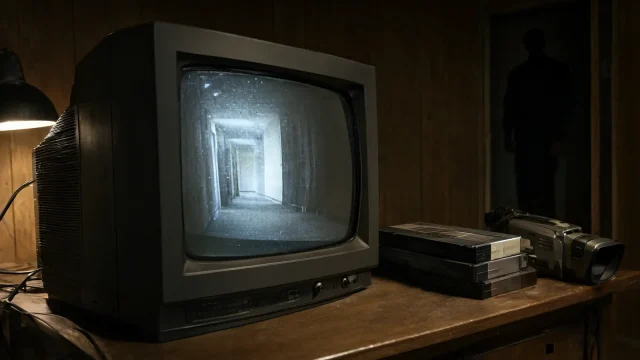
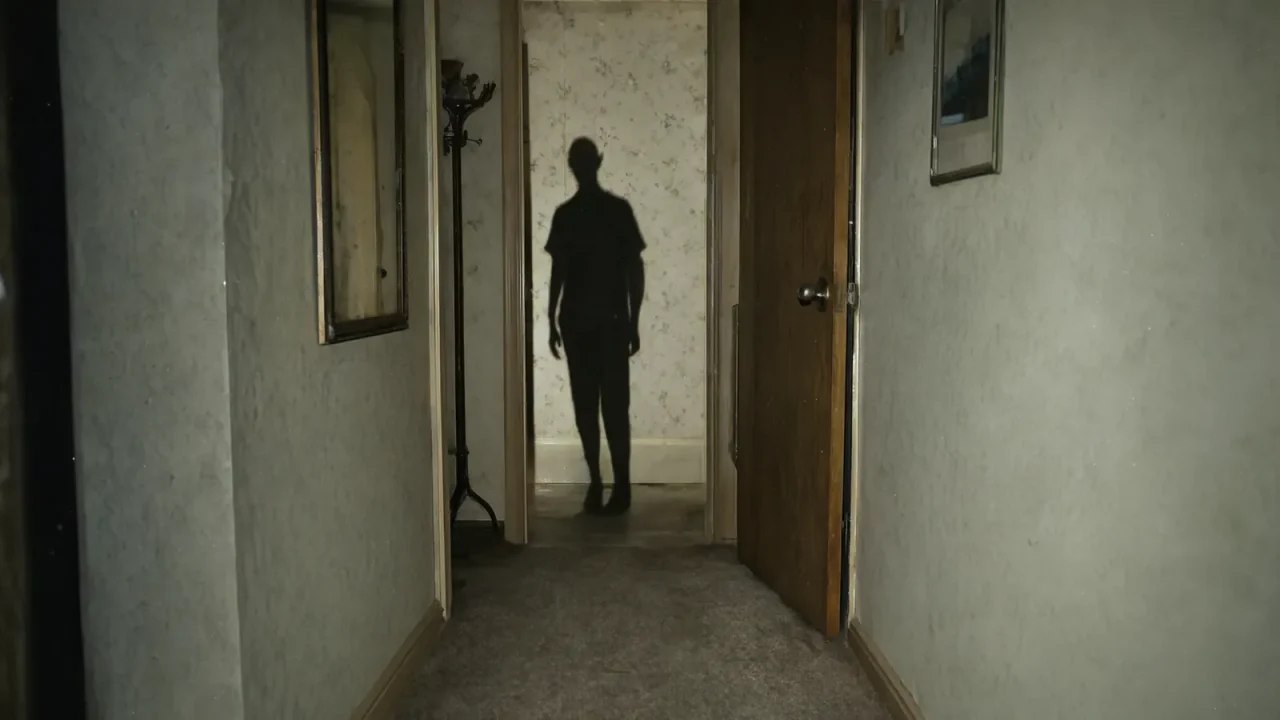
Inside the recovered broadcasts of The Mandela Catalogue, the primary existential danger comes from humanoid shape-shifters designated as Alternates. Created by American YouTuber Alex Kister in 2021 for his fictional Mandela County, Wisconsin storyline (spanning the early 1990s through the early 2010s), these enigmatic hivemind predators stalk living residents to replace them and eradicate humanity.
Archivists sorting an alternate Mandela Catalogue case dossier encounter shifting institutional labels across departments. Briefs from the United States Department of Temporal Phenomena (USDTP) classify them as a severe temporal threat, internal county files log them as “Anomalies,” and hidden files assembled by the Bythorne Paranormal Society (BPS) on Mandelatech.com initially downplayed them as “mysterious creature things” and “urban legends.” Whatever title sits on the tape sleeve, their core method holds steady: hijack televisions, personal computers, radio frequencies, and vehicle GPS receivers to isolate victims and drive them toward self-destruction.
All Canon and Retconned Subtypes
Series documentation divides the alternate Mandela Catalogue threat spectrum into five canonical classes, one unclassified architectural phenomenon, and one early concept quietly removed from continuity. Franchise archivists caution viewers to weigh conclusions carefully because several boundaries reconstruct scattered video clues and remain open to interpretation.
| Subtype | Canon Debut | Core Traits | Recorded Examples |
|---|---|---|---|
| Type One: Doppelgänger | Vol. 1 | Near-exact or indistinguishable human copy built to blend seamlessly into society. | Vol. 1 remake specimen; “Completed Assimilation” in Interlude |
| Type Two: Unspeakable | Overthrone | Formerly “Detectable”; seemingly immortal apex threat wielding supernatural force and direct lethal attacks. | Alternate Archangel Gabriel (sole verified member) |
| Type Three: Flawed Impersonators / Overdriven Assimilations | Vol. 1 | Grotesque mimicry errors displaying missing facial parts, overlong limbs, or inverted anatomy. | N, Faceless Girl, The Preacher, The Perpetrator |
| Type Four: Tulpa | Vol. 333 | Manifested through human—mostly children’s—imagination; thought to traverse mirrors and CRT screens. | Murray household entity (Vol. 333) |
| Type Five: Sleeper Alternate | Vol. 2 | Planted by The Intruder to replace kidnapped children; raised believing itself human until activation. | Adam Murray (linked to the 3,426 children reported missing across affected counties) |
| Unknown Type: Threshold Manifestations | Vol. 4 | Appears inside buildings as sounds of human agony visible only under night vision; mimicry unconfirmed. | Vol. 4 architectural recordings |
| Original Type 5: Mimic (Non-Canon) | Deleted 2022 post | Retconned concept mimicking inanimate household items, detectable solely via audible breathing. | Non-canon clips only (My Movie.mp4, The Scrimblo Catalogue I) |
In early 2022, a deleted community update briefly introduced inanimate-object “Mimics.” Because they never entered canonical episodes—despite fan chatter around non-canon skits like My Movie.mp4 alongside The Scrimblo Catalogue I—Kister quietly dropped Mimics from canon, reserving Type Five exclusively for Sleeper Alternates. Beyond the named core roster, wiki logs catalog background or fragmentary appearances including The Lamb, Doorway Alternates, TV Alternate, Face Studio 2 Alternate, Singer Of The Water, The Narrator, and wi_birdlover.
Anatomical Tells Across Faces, Eyes, and Voices
Rather than relying on graphic gore, Kister generates dread through subtle anatomical wrongness across faces, posture, dark hallways, and stolen audio—production choices unpacked further in our analog horror production guide.
Facial Distortion and Full-Body Anomalies
Overdriven Assimilations expose themselves via impossible proportions: stretched limbs, inverted features, or absent facial anatomy tracked across Mouthless, Eyeless, and Faceless variants. Apex specimens such as Archangel Gabriel and the recurring Vol. 333 Alternate physically elongate their faces beyond human bone structure. Documented entities cross age and gender lines, encompassing female-presenting figures like The Preacher (an elderly nun stalking young Adam Murray, whose title carries across fandom notes and merchandise), Faceless Girl and “Evelin’s Alternate.”
Glowing Eyes and Disguise Degradation
Two recurring signs betray impostors even inside plausible bodies. First, pitch-black doorway frames capture faint ocular glow—prominently on Cesar’s copy outside Mark Heathcliff’s bedroom in Vol. 1 [RESTORED EDITION], though whether entities switch that glow on intentionally remains unverified. Second, Kister stated during a livestream that an Alternate’s borrowed disguise gradually degrades over time. Episode visuals reflect that decay directly: Cesar’s copy lacks visible ears, and Adam Murray’s form steadily drifts toward Type Three traits even though he originated closer to a seamless Type One double.
Voice Mimicry and Audio Lures
Auditory deception matches facial imitation in lethality. Entities copy trusted human voices, songs, and radio chatter—even imitating animals in Vol. 2—to coax frightened victims out of barred bedrooms. Field records also note the reverse vulnerability: audio tracks replicating human terror and screaming can draw hidden Alternates out of cover.
Psychological Warfare, M.A.D., and Combat Immunity
While high-tier figures such as Gabriel can kill through brute force—shown when MandelaTECH manager Dave Lee (portrayed by Alex Kister in the year 2000 timeline) is lured into church employment and killed in Vol. 4—standard encounters hinge on psychological collapse. After cornering a target indoors, an entity triggers Metaphysical Awareness Disorder (M.A.D.) through unsettling vocal cadence or forbidden existential disclosures, pushing the victim toward suicide. Subtitles in Vol. 2 observe that afflicted individuals suffer multiple sleepless nights once symptoms appear, yet emphasize that M.A.D. stays avoidable unless someone actively pursues it.
Conventional weapons offer zero defense. Recorded footage depicts Alternates withstanding gunfire unharmed and mocking victims who shoot back. Early T.H.I.N.K. Principle tapes and police broadcasts first instructed callers to dial 911 and use firearms as a last resort before the Mandela County Police Department halted responses to Alternate emergencies as fatal to responding officers. Critically, Vol. 1 [RESTORED EDITION] implies that directives telling dispatchers not to send aid—alongside placing suicide as the T.H.I.N.K. Principle’s final step—were tampered onto the cassette by an Alternate, echoed by the stark post-MCPD warning “NOTHING IS WORTH THE RISK.”
Chronological Sightings and Notable Individuals
In-universe records extend the Alternate threat millennia before consumer magnetic tape:
- Biblical origins: Visual cues place Alternate Archangel Gabriel in the background as early as the Third Day of Creation in Vol. 4, which further implies that the first man, Adam, was replaced or converted into the “original alternate” shortly after Creation before staring uneasily at Eve. In Exhibition, a false angel posing as Gabriel fails to halt Noah’s Ark and vindictively slips a creature aboard that brings about Noah’s death.
- Bethlehem sabotage: Centuries later in Overthrone, false Gabriel intercepted the genuine Archangel Gabriel in Bethlehem, twisting the Annunciation and claiming dominion over human devotion.
- Analog surge and digital dormancy: Casualties spiked across the Analog Era. Although residents moving into the Digital Era assumed Alternates had been exterminated, surviving recordings indicate many simply stayed quiet—while the USDTP allegedly studies captured specimens as MCPD circulates missing notices.
Six named antagonists anchor the overarching crisis: Archangel Gabriel (Type Two leader and series incarnation of Satan, voiced via eSpeak in Overthrone, Microsoft Sam in Exhibition and Vol. 5, and Kyle DeNigris in Vol. 4), The Perpetrator (Cesar Torres’s double, who broke Mark Heathcliff), The Preacher (elderly nun haunting four-year-old Adam), N (the T.H.I.N.K. Principle silhouette linked to Jude Murray’s breakdown), The Murray Residence Alternate (killer of Sergeant Ruth Weaver who stalked Lieutenant Thatcher Davis seventeen years later), and Adam Murray himself. One boundary must never blur: The Intruder (Six)—voiced by Microsoft Sam in Intruder Alert and Vol. 2, then Leon Rodriguez in Vol. 4—is explicitly not an Alternate, but an allied humanoid anomaly responsible for abducting over three thousand children.
Human Investigators Caught in the Mandela County Crisis
Tracing how ordinary residents intersect with Alternates clarifies why the franchise sustains long-form suspense across multiple eras rather than functioning as isolated jump-scare clips. Wikipedia’s cast archive maps two distinct generations of victims and investigators:
- Mandela County Police Department responders: Former Lieutenant Thatcher Davis (portrayed by Thorne Baker, who created his own analog short Maple County in 2021 prior to joining the series) devotes years to stopping Alternates after the Murray Residence entity kills his fellow sergeant Ruth Weaver (portrayed by Bee “Fruitmasseuse” L). Earlier calls from father Jude Murray (Michael Vale) and the suicide of his wife Lynn Murray (Lighth0use) after Six took infant Adam established the department’s deepening paralysis.
- Bythorne Paranormal Society investigators: Sarah Heathcliff (Rachel Ridley) founded the BPS after police ignored pleas that might have saved her brother Mark Heathcliff (Alex Kister), who was lured to the home of his assimilated friend Cesar Torres (Andrew Long). Working alongside Sarah, club member Adam Murray (Ty Osborne), his ex-girlfriend Evelin Miller (Spidey, who also worked under Dave Lee at MandelaTECH and noticed Adam’s sudden behavioral shift), and third member Jonah Marshall (Gabriel Linan, who died after fleeing a 3 a.m. trap) piece together the hidden Alternate infrastructure.
Even archival religious cartoons woven into the tapes carry verifiable production credits: within episodes sampling The Beginner’s Bible, most voice actors go uncredited by role, leaving Rich Swingle (voicing the biblical Adam appearing in Vol. 2) as the only identified performer from those segments.
Production Evolution, Reception, and Franchise Expansion
Understanding how Alternates work onscreen requires noting the shoestring constraints that shaped them. Seventeen-year-old student Alex Kister began the project from Richfield, Wisconsin during summer college in 2021 as his first filmmaking venture, naming the franchise after the Mandela Effect. What started with overthrone (released June 9, 2021) as a standalone spin on a high school writing assignment—initially envisioned as creepy edits of children’s cartoons—grew into a sprawling mythos rooted in Kister’s personal existential questions about Christianity alongside pandemic-era isolation. Working on minimal funds at home, he enlisted friends for still portraits and voiceovers, and even cast his own mother as an Alternate.
By July 2026, the series covered two overarching Acts made up of six main volumes plus thirteen brief standalone uploads. Visual grammar evolved deliberately with each in-universe decade: Act I (2021–2022) leaned almost entirely on worn VHS aesthetics, whereas Act II (2022 onward) shifted into dated early-digital camcorder footage and mixed media. When Vol. 4 introduced green-screen live-action sequences that some viewers criticized as artificial, Kister explained that the unnatural texture was intentional to heighten the uncanny valley.
Critical coverage reflected both its influence and growing pains. Dread Central hailed the series as a premier benchmark for analog horror sight and sound; Ohio University’s The Post compared its uncanny-valley craft favorably alongside The Walten Files; and GQ praised its unsettling reach, while TLK Magazine commended the worldbuilding yet faulted monotone voice delivery. Beyond criticism, Alternate tropes crossed rapidly into broader internet culture: animator Sr Pelo published the hit parody The Mandela Magazine on June 30, 2022 (earning a warm comment from Kister), Makeship partnered on crowdfunded plush merchandise in October 2022, and a viral TikTok trend swept short-form feeds in 2023. Behind the scenes, Kister began drafting a feature screenplay in June 2022, publicly confirmed the script in May 2025, and saw the film adaptation—produced through Paper Street Pictures alongside United Artists and Amblin Entertainment—assigned a June 9, 2028 release date in September 2026.
Key Entity Dossiers: False Gabriel, 6, and Adam Murray
Studying individual case files across the franchise wiki clarifies how command authority flows down from the overarching usurper through field anomalies and sleeper operatives.
Archangel Gabriel as the First Alternate
Cataloged as the primary antagonist and the earliest Type Two entity, the usurper calling itself Archangel Gabriel—and at times “The Holy Spirit”—appears in Overthrone to derail the Annunciation and claim the position of humanity’s sole savior. In its deceptive angelic presentation, the figure wears a flowing white robe with pale blonde hair and long white wings, projecting the serene stature of a slender young messenger. Beneath that mask, archival profiles note a true silhouette reaching up to 3 meters in height, marked by distorted facial stretching and cold mocking broadcasts delivered to targets such as Dave Lee in Vol. 4.
Unlike rank-and-file mimics confined to nocturnal stalking, this apex specimen directs systemic deception across centuries. By inserting altered religious animations—such as manipulated excerpts of The Beginner’s Bible—and exploiting human faith, false Gabriel demonstrates that psychological subjugation outlasts isolated physical violence.
6 (The Intruder) and the 2009 Screen Prohibition
Fandom records strictly distinguish 6 (colloquially designated The Intruder) from standard Alternates while emphasizing his pivotal strategic alliance with them. Across affected counties, 6 is tied to the disappearance of 3,426 children, a crisis severe enough that regional authorities banned most screen-based devices and household mirrors by 2009. Two primary appearances anchor his dossier: a pale, hooded figure wearing dark fabric—first sketched with a wide smile in young Mark Heathcliff’s “Scary Night” notebook—and a stark television intrusion face introduced during the Toddler Stress Assessment and Intruder Alert.
Rather than physically chasing adults down hallways, 6 operates through domestic screens and reflective surfaces, speaking directly to isolated youths and engineering parental despair. His later monologue to Adam Murray exposes how abduction and replacement intertwine: after seizing children from darkened bedrooms, allied forces leave sleeper replacements behind to mature inside unsuspecting households.
Adam Murray and the Sleeper Activation Arc
Co-investigator Adam Murray illustrates how Type Five Sleeper Alternates erode human trust from within. Operating alongside Jonah Marshall inside the low-budget Bythorne Paranormal Society (BPS)—recognizable by his black hoodie stamped with yellow BPS lettering on front and back—Adam travels from Bythorne County into Mandela County searching for answers about his vanished mother and childhood trauma. Gradual behavioral chill, growing emotional detachment noticed by ex-girlfriend Evelin Miller, and 6’s blunt revelation force Adam to confront the reality that he is not the human child originally born to Jude and Lynn Murray. His trajectory bridges Act I’s survival horror with Act II’s introspective identity collapse.
Human Case Studies: Mark Heathcliff and Lieutenant Thatcher Davis
Two recurring human archives—one documenting fatal entrapment, the other chronicling stubborn resistance—map the exact tactical playbook Alternates deploy against both civilians and trained officers.
Designated Victim One in September 1992, Mark Heathcliff grew increasingly paranoid as T.H.I.N.K. Principle warnings broadcast throughout Mandela County and neighboring districts. When an impostor imitating Cesar Torres phoned with an urgent story about rushing his collapsed mother to the emergency room, Mark drove to Cesar’s home to activate the security cameras, unwittingly drawing a predator back to his own bedroom. Trapped indoors while the entity mimicked familiar speech outside the door, Mark documented his deteriorating resolve in written entries before ending his life after emergency dispatchers refused assistance. Earlier childhood drawings from age four—recording his “Scary Night” sighting of 6—hint that Alternates and their allies track selected families across decades.
Thatcher Davis, main protagonist of the series and a Lieutenant in the Mandela County Police Department since the opening phase of the crisis, embodies the institutional toll of that siege. Television archives even preserve a department broadcast celebrating promotions for Thatcher Davis and Sergeant Ruth Weaver before their fateful night response to the Murray household. After the Murray Residence Alternate killed Ruth Weaver and shrugged off close-range gunfire, Thatcher endured survivor guilt captured in every day gets brighter and endured years of anonymous harassment—including bulk emails flooding department computers with identical copies of My Movie.mp4. By Vol. 6, however, Thatcher refuses total surrender, telling Adam Murray that he still holds onto hope even after witnessing how thoroughly Alternates infiltrated county infrastructure.
Literary Doppelgängers and the Uncanny Valley in Analog Horror
Situating Alternates inside broader folklore and perceptual science explains why minimal digital edits evoke enduring dread. In European literature, the English loanword doppelgänger derives from German for a “double-walker”—a ghostly counterpart whose appearance foretells misfortune. German novelist Jean Paul coined the earliest recorded spelling, Doppeltgänger, in a footnote to his 1796 novel Siebenkäs (while assigning Doppelgänger a separate sense in the same text). Nearly a decade earlier, Francis Grose’s 1787 Provincial Glossary documented the British folkloric term fetch for the apparition of a living person. Across Romantic fiction and modern suspense alike, encountering one’s own double fractures personal identity far more deeply than facing an obviously alien beast.
Perceptual psychology reinforces that literary heritage. In 1970, robotics professor Masahiro Mori outlined the bukimi no tani phenomenon—translated as the “uncanny valley” by Jasia Reichardt in her 1978 book Robots: Fact, Fiction, and Prediction—showing that human affinity plunges sharply into revulsion whenever a nearly human figure displays subtle mechanical or anatomical defects. Brain-imaging studies reported in 2011 by researchers at the University of California, San Diego examined neural responses triggered by this mismatch, and psychologists Alexander Diel and Michael Lewis extended the model to architectural liminality in 2022. Alex Kister’s entities sit squarely inside that perceptual trough: framed through degraded VHS electronics and late-twentieth-century broadcast formats pioneered online after Kris Straub’s October 2015 landmark Local 58 (“ANALOG HORROR AT 476 MHz”), an Alternate’s missing ears, unblinking flash-lit pupils, or subtly elongated jaw break human facial recognition just enough to turn domestic video into sustained psychological dread.
Canon Record vs. Fan Theories and Folklore Parallels
Sparse archival clues naturally spark active debate, making it essential to distinguish canon footage from fan theories and viewer interpretations:
- Demonic traits and supernatural mobility: Episode symbolism strongly implies demonic physiology alongside apparent teleportation (spectrum traveling) and flight or levitation—shown by Gabriel and the Vol. 333 Alternate—yet whether every subtype shares flight remains unconfirmed.
- Folklore parallels and the tulpa debate: Archival notes link “doppelgänger” (German for “double-walker”) to the Egyptian ka and Norse Vardøger, and “tulpa” to thoughtforms shaped through meditation or lucid dreaming. Fans still debate whether tulpa-class entities genuinely materialize from children’s minds (as hinted by the Might of the Subconscious program) or whether The Intruder merely funnels pre-existing Alternates through CRT screens and mirrors.
- Theological motifs: Deleted 2024 teasers referencing Jeremiah 1:8 (“Be not afraid of their faces”) and artwork invoking Job 23:15–17 reinforce religious dread, though archivists read them as thematic cues rather than fixed biological laws.
Frequently Asked Questions
How many types of Alternates are canon in The Mandela Catalogue?
Five primary subtypes stand in canon—Type One (Doppelgänger), Type Two (Unspeakable), Type Three (Flawed Impersonators / Overdriven Assimilations), Type Four (Tulpa), and Type Five (Sleeper Alternate)—alongside unclassified Threshold Manifestations. An early Type 5 Mimic concept was silently removed from canon.
Can an Alternate be killed with guns or conventional weapons?
No canon tape shows bullets injuring an Alternate. They appear nearly immortal, ignore gunfire, and have laughed at victims firing at them, forcing the Mandela County Police Department to stop answering Alternate calls.
What is M.A.D. and how do Alternates use it against victims?
M.A.D. stands for Metaphysical Awareness Disorder, a psychological attack delivered once a victim is cornered. Using unsettling vocal tones or forbidden topics, entities provoke sleeplessness and paranoia severe enough to cause suicide, though subtitles in Vol. 2 note it can be avoided unless actively sought out.
Is The Intruder an Alternate?
No. Both Wikipedia and franchise wiki records classify The Intruder (Six) as a separate humanoid anomaly rather than an Alternate. He cooperates closely with Archangel Gabriel and Alternates, kidnapping over three thousand children including Adam Murray.
Sources and Archival Attribution
- Alternates — The Mandela Catalogue Wiki (The Mandela Catalogue Wiki Contributors, revid 17023, verified 2026-11-28, licensed under CC BY-SA 3.0).
- The Mandela Catalogue — Wikipedia (Wikipedia Contributors, revid 1387823911, verified 2026-11-28, licensed under CC BY-SA 4.0).
- The Mandela Catalogue — The Mandela Catalogue Wiki (CC BY-SA 3.0, rev. 16997).
- Archangel Gabriel — The Mandela Catalogue Wiki (CC BY-SA 3.0, rev. 16924).
- 6 — The Mandela Catalogue Wiki (CC BY-SA 3.0, rev. 16261).
- Mark Heathcliff — The Mandela Catalogue Wiki (CC BY-SA 3.0, rev. 16562).
- Thatcher Davis — The Mandela Catalogue Wiki (CC BY-SA 3.0, rev. 17012).
- Adam Murray — The Mandela Catalogue Wiki (CC BY-SA 3.0, rev. 17040).
- Doppelgänger — Wikipedia (CC BY-SA 4.0, rev. 1383273237).
- Uncanny valley — Wikipedia (CC BY-SA 4.0, rev. 1387270465).
- Analog horror — Wikipedia (CC BY-SA 4.0, rev. 1386064050).